

Introduction: Hello, I’m Fiona and my husband is Jean-Louis, people often ask us if we make a stop-over on our annual journey between Perth, Western Australia and Provence, France – so I thought I’d share details of the stop-over we had earlier this year in Kuala Lumpur (KL), Malaysia.
We chose to fly with Turkish Airlines (TA) as the price was right and recent reviews for the airline are excellent. We had return (two-way) tickets which we purchased in France in 2023, The reasonable pricing was in part due to the three-leg nature of the journey, which for us meant Marseille to Istanbul, then on to KL, then finally on to Perth with Malaysia Airline System (MAS in partnership with TA). That was back in late October 2023. So this year, in May 2024, we did the reverse and used the return part of our tickets, taking the opportunity to stay in KL for one week.
Overview: We found that there is plenty to do in KL to satisfy us immensely, without venturing into pricey, touristy venues and experiences – only two places we visited are listed on the ‘top ten things to do in KL’ list on TripAdvisor. Instead, our itinerary is quite laid-back, but offers something new each day – suitable for a couple or family with teenage children, with plenty of time to add-in more, especially if it’s your first visit to Malaysia’s capital, in which case you might be tempted to add in attractions like the Petronas Twin Towers or KL Tower, the Forest Eco Park or Aquaria, especially if you need to keep children occupied.
I am particularly interested in art, architecture, historical culture and local cuisine as well as nature, which is definitely reflected in this itinerary – so if you are like-minded, then I think you’ll appreciate my suggestions.
(below) Inside the Central Market in China Town, Petaling Street, the roof-top pool of our hotel.


We chose to stay in Chinatown due to proximity to the Central Market, the Klang river, Little India, several museums, and especially the historical heart of the city. Overall we had a fantastic week – the variety of stunning architecture amazed me, the River-of-Life’ area was well designed and beautiful, the local people were all polite and good humoured. Food was great, the Islamic Arts Museum was better than one we have seen in Istanbul, and it proved to be relatively easy to get around KL. Overall it was a more enjoyable holiday than I’d anticipated.
Accommodation: Hotel Santa Grand Classic KL is a small hotel (about 30 rooms) with a roof-top pool and friendly staff. We had a ‘Superior’ room which actually seemed quite standard but with everything one needs including good shower and a window that opened, house slippers, plus a comfy bed and pillows. We managed okay in this rather small room as we had only two suit-cases, but for about $10 per night more, it’s possible to upgrade to a larger suite. We also had breakfast at the in-house restaurant several times which was great value at approximately $8 per person. The ‘Live egg-station’ was a bonus – the young chefs made perfect omelettes and scrambled eggs each time, as well as freshly made waffles or pancakes (alternate mornings). We used the roof-top pool everyday, occasionally twice a day and had the space to ourselves each time – we thoroughly enjoyed the view too. The roof-top area had a shower, a toilet, as well as a small gym with weights and a treadmill.
Generally this was an extremely well-priced hotel for the amenity, location and boutique size. We paid AUS$427.11 for seven nights and were given a bonus pick-up from the airport for booking the full week. I booked through booking.com and the cost reflects 10% discount off the standard rate due to my ‘Genius level 3’ standing with this online platform.
TIP #1: In the heat and humidity of Malaysia it’s essential to book accommodation with a pool.
TIP #2: Most stores and eating places open at 10am in KL. In the vicinity of our hotel we could find only one café that was open early and serving a western or European-style breakfast, and it was very pricey. Hence on day two we opted to have breakfast at the restaurant in our hotel. On a couple of occasions, we bought pastries from a bakery on the ground floor of the Central Market and ate them the following morning in our hotel room (we discovered that late in the evening the baked goods were discounted to half-price). Our room had a kettle with tea and coffee supplied, plus a small fridge which enabled us to buy and store a carton of milk – so that was a quick and easy breakfast solution on days when we wanted to get out and about early.
DAY 1: Tour with private driver/guide to Melaka/Malacca, 8am to 6pm
Overview: The city of Malacca is the capital of the Malaysian state of the same name, it is roughly 145 km (125 miles/200km) south of KL and is a UNESCO World Heritage Site known for its significant places such as: the Portuguese-built ‘A Famosa Fort’, 16th-century ‘St Paul’s Church’, Christ Church, and the Dutch-built clock-tower in ‘Red Square’ (Dutch Square). The once thriving port city had rich asiatic beginnings followed by the influence of Arab, Persian and Indian traders during the 15th century then, from the early 16th century, attracted intense interest from the Portuguese and Dutch, followed by the British in the 19th century.


(above) St Peter’s Church, Riverside Road, Jean-Louis outside a temple (below) rickshaws in Dutch (Red) Square, the river.

I’d been keen to visit Malacca for some time, due to its rich history and partly European heritage; so we were thrilled when our dear friend, who harks from Malaysia, gifted us a private day-tour of this interesting port city. Despite it being over two hours drive from KL to Malacca, it was a pleasant journey as our guide had plenty to describe as we travelled along; plus we stopped on the way to stretch our legs and use the bathroom in Alor Gajah district (which is about three quarters of the way to Malacca). The pit-stop was pleasant, the café had a large sitting area, very clean toilets and facilities. I noticed that there were western-style toilets everywhere we went – this was not the case on our last stay-over in KL in 2012.

(above) Dutch houses along the river (below) Nyonya traditional costumes.

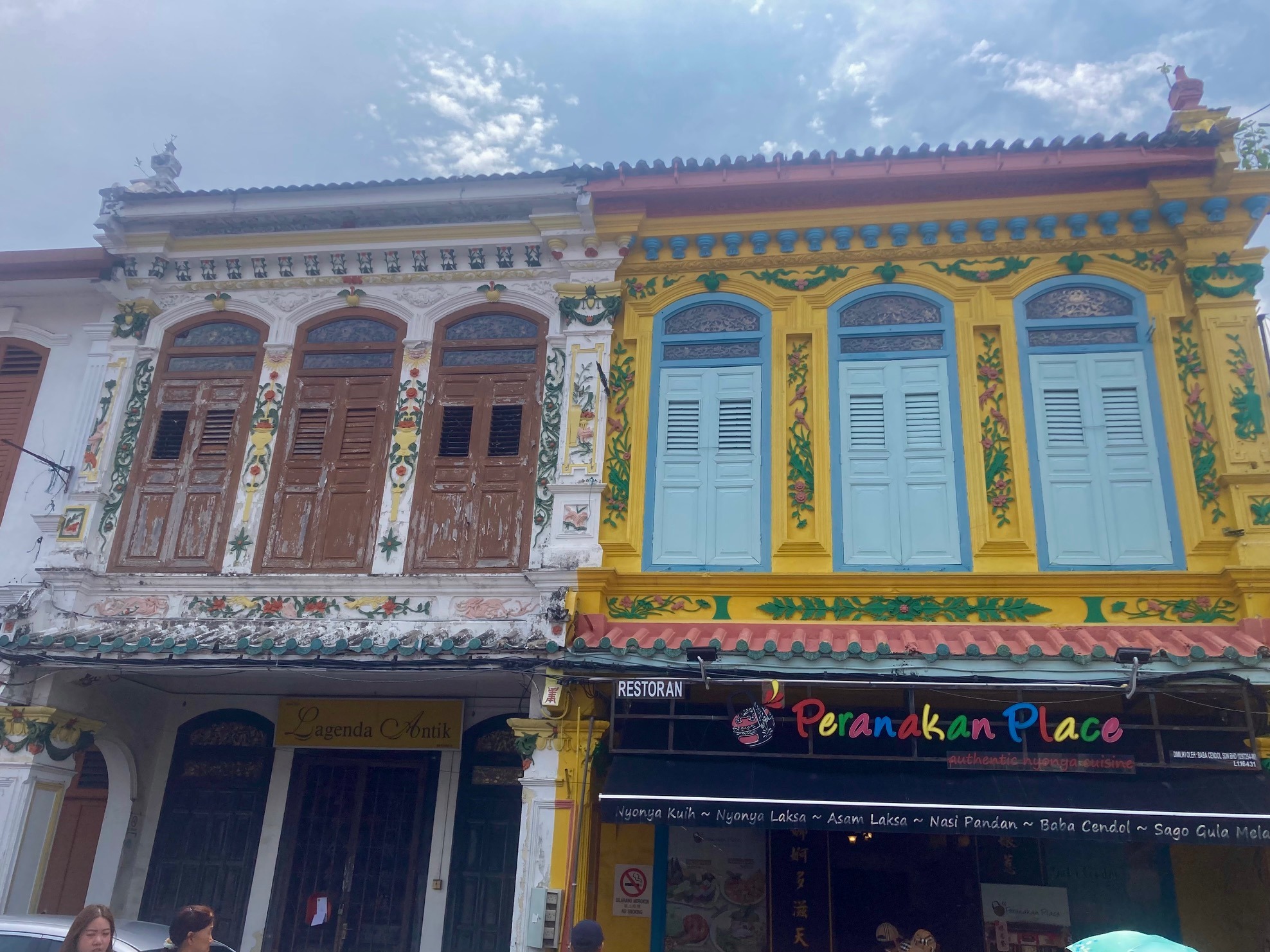
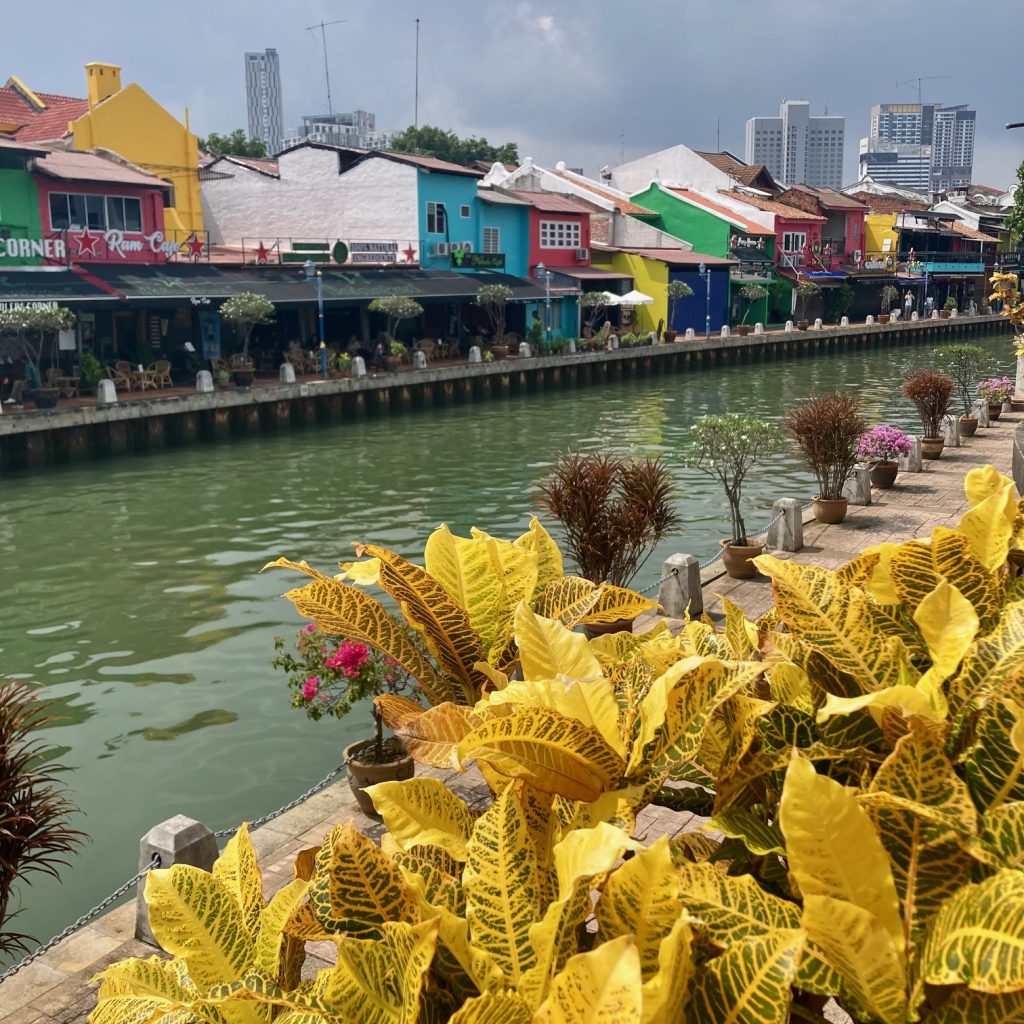
We absolutely loved our visit to Malacca, most of the historical sites were encompassed within a circuit that one could easily walk around in an hour if not for the obvious need to stop, look and explore! We had some free time to explore after lunch and I particularly loved seeing all the colourful houses in the old centre (photos below) near the restaurant where we ate lunch, as well as along the river.



We also spent an hour or so in the Baba and Nyonya Heritage Museum – this preserved mansion of a wealthy merchant family, is full of beautiful domestic details, hand-crafted furnishings, art and memorabilia – highly recommended (photos below).


If you’re not staying a night or two in Malacca, then I definitely recommend having a local guide to take you from KL, ours was extremely knowledgeable, timed all the visits within our tour perfectly, got us to the restaurant before it became crowded, and delivered loads of information that would have taken us hours to research on our own. He did say that the historic centre of Malacca and the river are great to see at night when it is beautifully lit up – alas we hadn’t planned for that. At the end of the day our guide also made several suggestions for things to see near to our hotel, which was a bonus. Not only was he extremely knowledgeable about Malacca, KL and Malaysia, he was very amenable and his english was excellent. Door-to-door service in a spacious, clean, air-conditioned and comfortable car made this such an easy and enjoyable day.

(above) St Paul’s church next to the ‘A Formosa Fort’ (below) nearby ruins of an old Portuguese church.

As I mentioned earlier, our tour was arranged for us as a gift by a friend who had been recommended to book Mr Arul (in pic above with Jean-Louis) by KL friends, so as a consequence I do not know the cost of the tour. If you would like to email Mr Arul to make an enquiry, do say that Fiona Diaz recommended him to you: arulsantiago2@gmail.com
LUNCH: The restaurant our guide chose (we paid for his meal) offered typical Nyonya style cuisine, had fast service, good prices and excellent food – approximately $38 for three of us, lots of dishes to share, beers, juice for me and tea for all three of us. The link is here Our Place Nyonya Cafe.

(above + below) A walk along the river is a ‘must do’ when in Malacca to see the colourful houses.
TIP #3: There are many listings online through which you can book a private guide/driver or experience, such as withlocals.com or here specifically for KL, or on Viator to suggest just a few.
DINNER: Back in KL for the evening, we walked around the Petaling Street area and enjoyed delicious soupy noodles at ‘Your Way Lamian’ on Jalan Sultan – you can see info and a review by ‘KL Foodie’ here.
DAY 2: Exploring the historical centre of Kuala Lumpur and the ‘River of Life’
After a quick look inside the Central Market to see what it contained (loads of stores selling habd-crafted as well as mass-produced souvenirs, jewellery, ceramic and textile items, clothing, baskets, bread, ice-cream, packaged spices and food items, plus more textile and clothing boutiques upstairs and a large food-hall), we took a self-guided walk along the river into the historical precinct.
Barely 200m from our hotel and running alongside the back of the Central Market, lies the Klang river and boardwalk which takes you to the confluence of the ‘Klang and Gombak rivers’. The magnificent ‘Sultan Abdul Samad Jamek Mosque’ (built 1909) is situated at the confluence of these rivers and is not to be missed. The river area has landscaped gardens and well designed pathways which lead you around this zone called ‘River of life’.

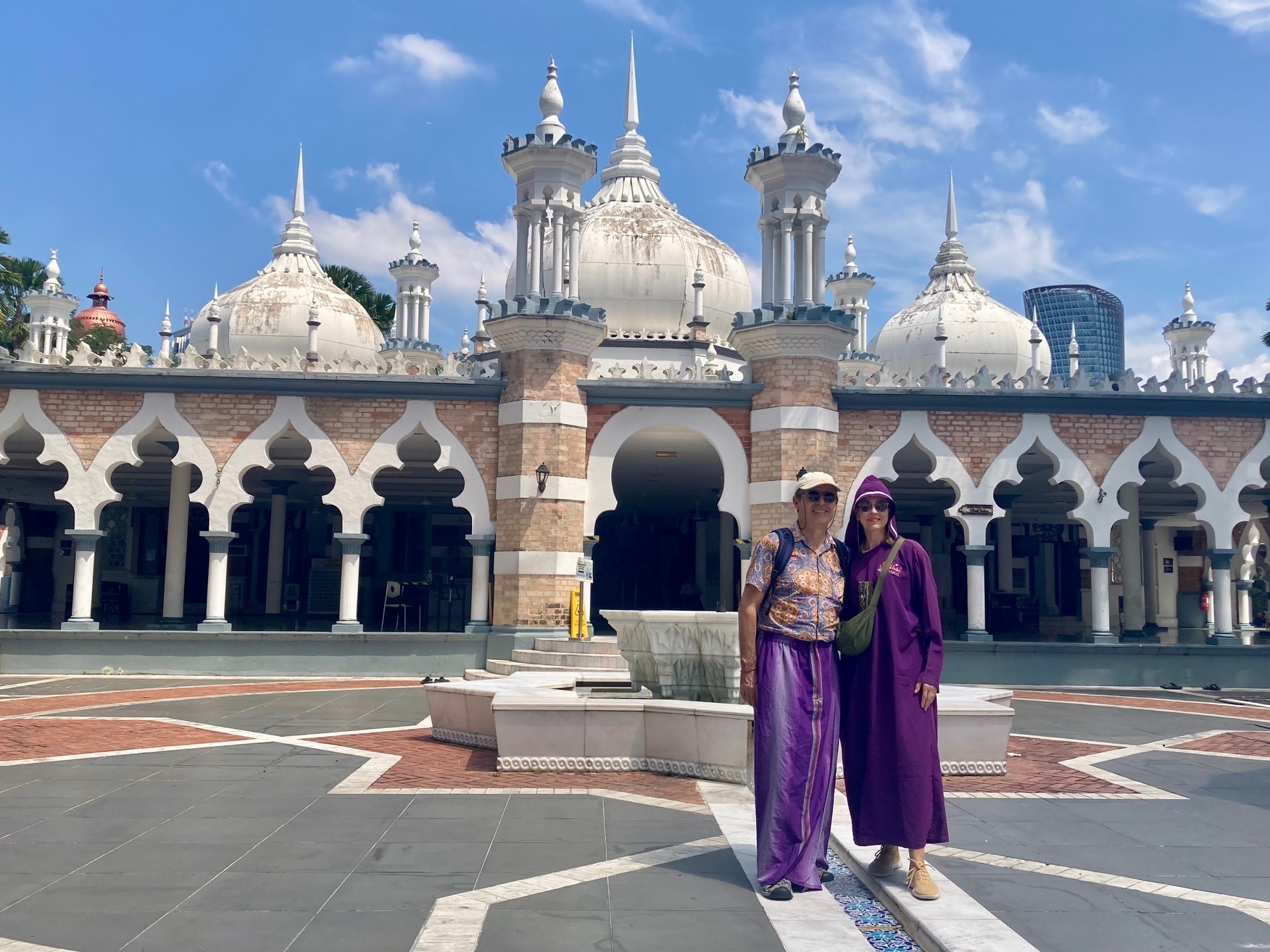

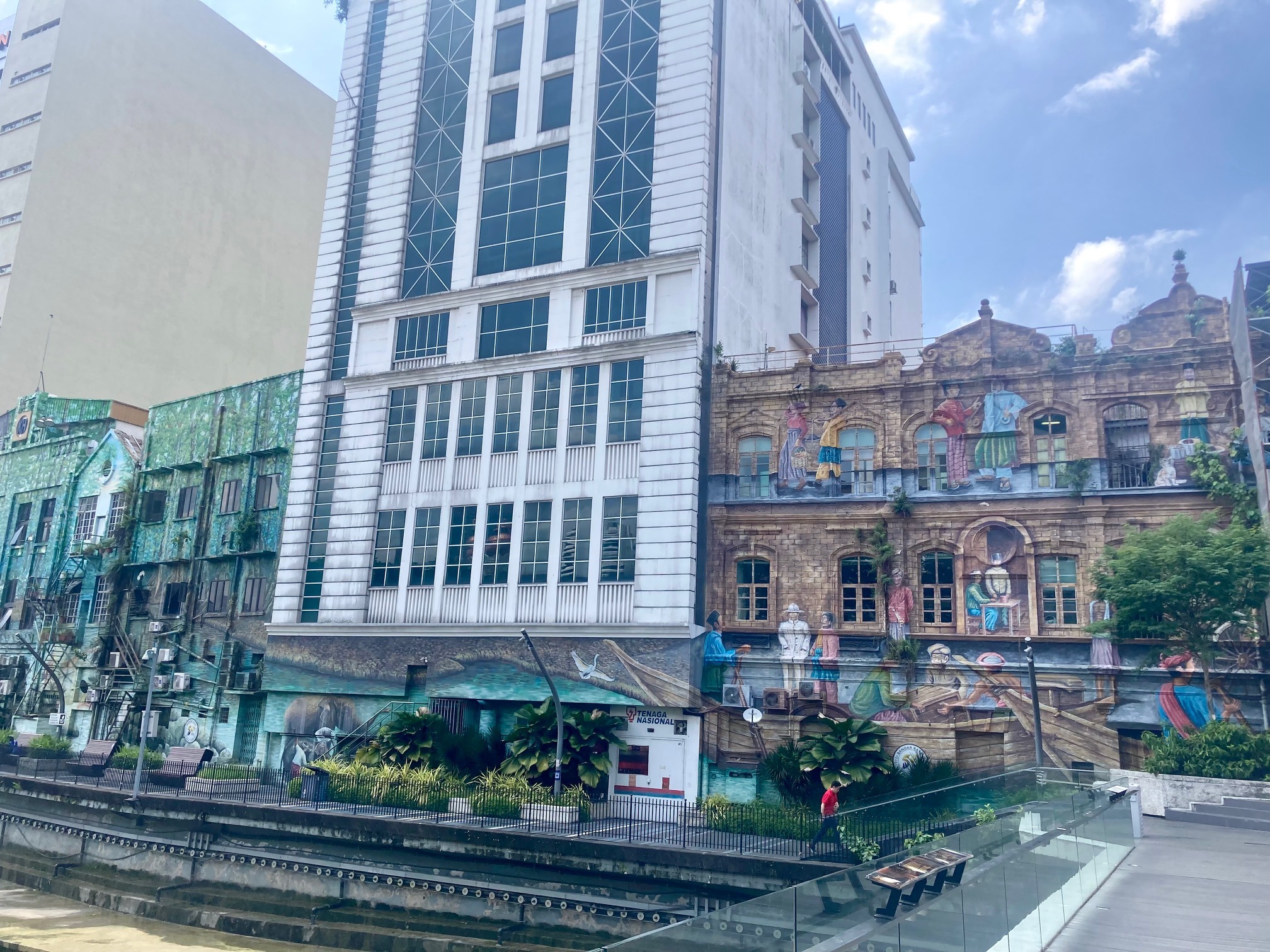
We were well occupied for several hours in this vicinity – we visited the mosque, which is FREE and provides long robes to wear over your attire to render you suitably modest; we also walked around and admired the ‘Sultan Abdul Samad building’ (previously offices of the British Government administration) and enjoyed the many fantastic murals which adorn some of the old buildings that face the river. Allow plenty of time for taking photos.

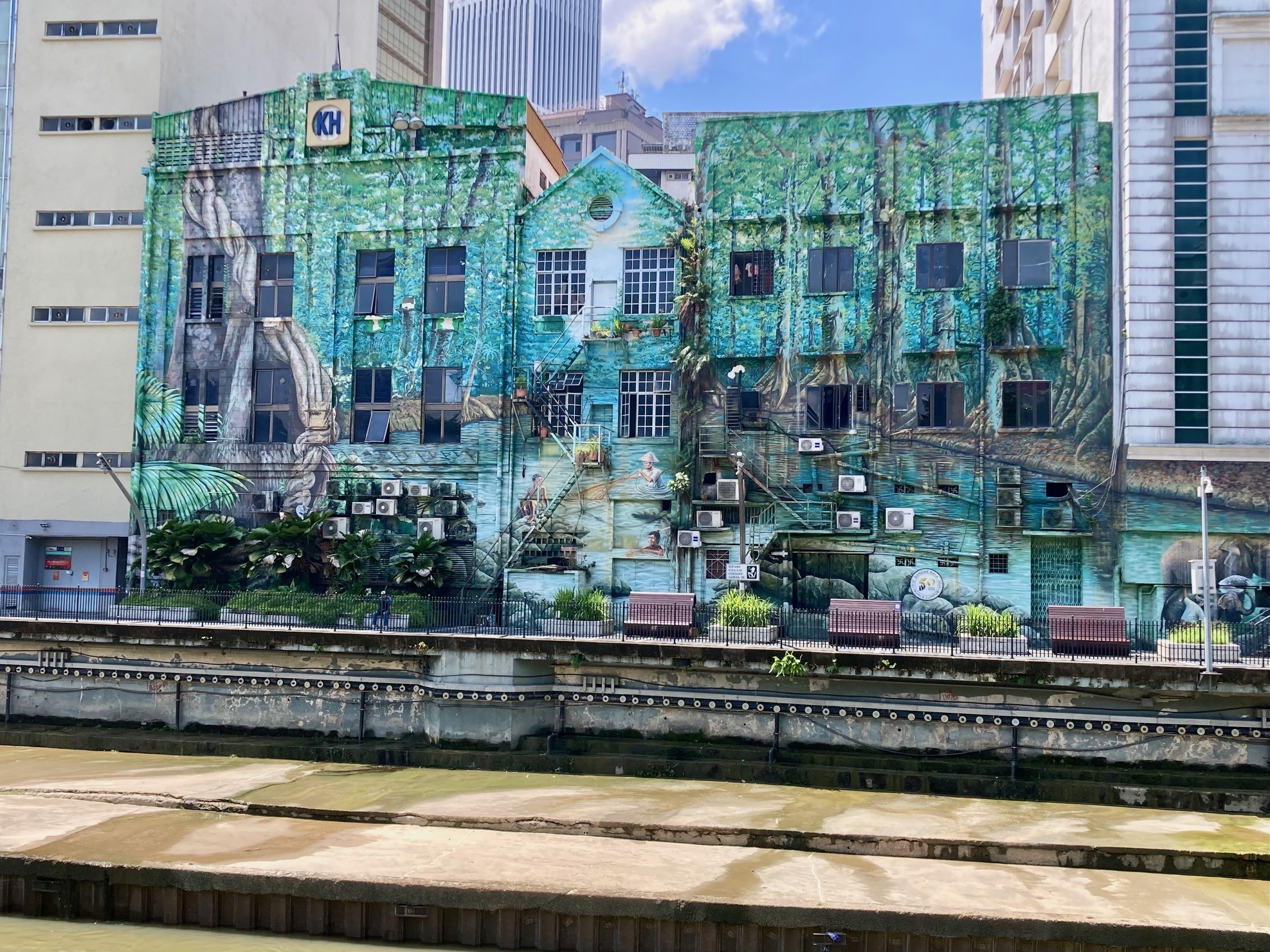

After lunch we returned to the hotel for a swim and rest during the heat of the day – this quickly became our afternoon routine for the rest of the week.
In the evening we walked to nearby Little India to see the ‘Sri Mahamariamman Temple’ – we didn’t go in as we weren’t dressed appropriately, so instead we bought finger-food snacks and Indian desserts from a café near the temple and ate as we wandered around exploring the streets in that area.
TIP #4: Carry a lightweight shawl or sarong in your backpack for impromptu temple visits.
TIP #5: Pack a silicon, food-safe bag to pack-in all the tempting snacks you buy as you walk around – saves collecting plastic bags.
DAY 3: Taman Tugu Forest and Sri Mahamariamman temple
We walked to ‘Taman Tugu‘ forest trail to hike and see some of the 230 or more indigenous rainforest species represented there, as well as 1,000 trees classified as endangered or critically endangered. It’s the perfect place for jungle experience as we spied a group of monkeys on our way there, and a good place to drink young coconut, a must-try if you haven’t already. Coconut water is super hydrating (is a natural hydrolyte) so before we started the trail we bought one to share from the kiosk near the entry, and then shared another after we’d finished. At 6RM it was the cheapest price we saw anywhere for young coconut.

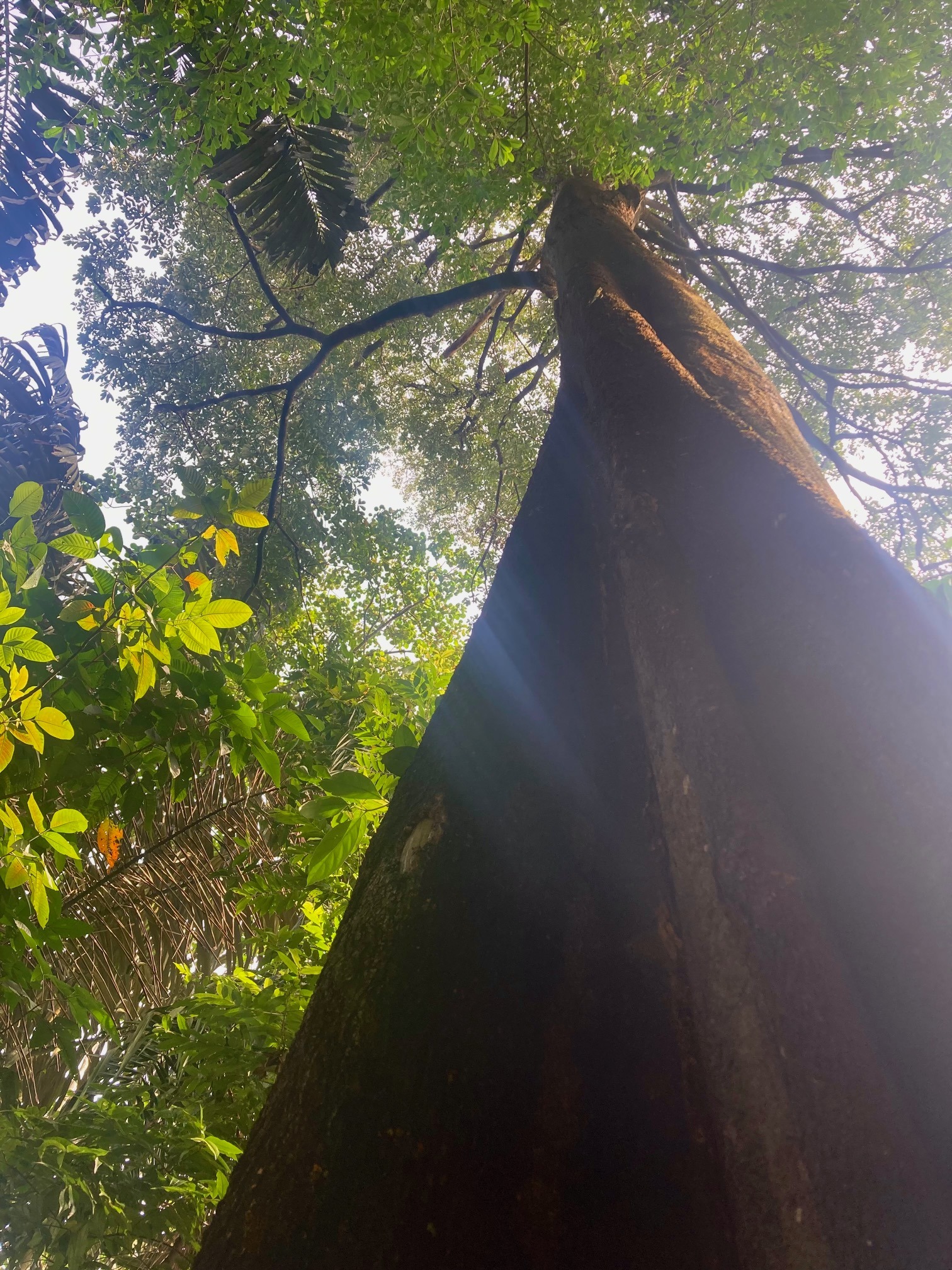


TIP #6: Be sure to stay well hydrated when out exploring in a humid environment, as one usually perspires more than usual – check link above for ‘hydrolytes’ and scroll to paragraph on coconut water.
TIP #7: When buying a young coconut to drink, don’t forget to pick up a spoon from the vendor (or take your own) so that you can eat the soft coconut flesh as well as sip the clear coconut water. We forgot to do this initially but soon saw the locals around us with spoons, so we quickly followed suit.
The walked to the reserve and back took about 45 minutes each way, and we hiked for approximately 90 minutes within the reserve. It was a rather convoluted walk to find our way across the freeway/autoroute so you might prefer to take a taxi, particularly if you want to save your strength for the trails. The reserve opens at 7am, so we suggest you start as early as you can to be finished before the heat sets-in. We highly recommend this experience, entry is FREE and there are many trails to hike; we saw only local people and family groups there, so it felt like a local hidden gem.
TIP #8: As plastic straws are still used a lot in KL, I found myself wishing that I’d taken my own spoon and straw, so you could consider packing your own too. Stores in most countries sell lightweight cutlery made from recycled plastic or bamboo, though of course metal items are fine unless you’re taking only a carry-on or in-cabin bag on your flight – you don’t want them to be confiscated.
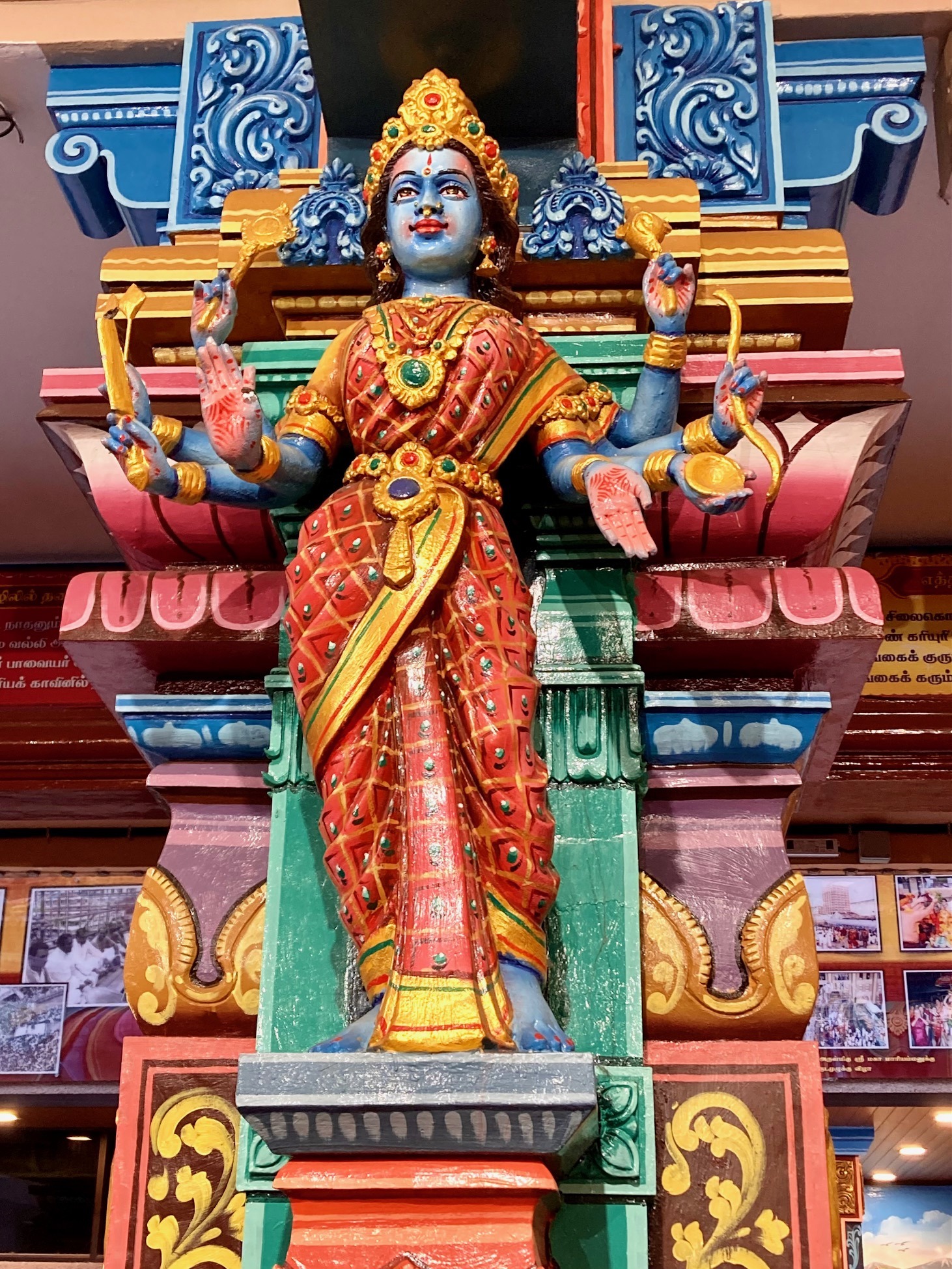
In the evening, after a restful afternoon at the hotel and pool, we revisited the ‘Sri Mahamariamman Temple‘, this time suitably attired in clothing that covered our arms and legs! Like most Indian temples it is an extremely colourful place, with lots of fabulous carved motifs and characters from Hindu religious stories, of Gods, Goddesses and many varied animals. Highly recommended, particularly if you’ve never before visited a Hindu temple, plus it’s FREE.



LUNCH: Laksa and lemon juice drinks at the Central Market, 2nd level food hall.
DINNER: Tang City, just off Petaling Street, a small food-hall with various food stalls, great drinks stall – large pineapple juice was just 8RM and Carlsberg beer 12RM, we ate noodles which were quite good.
TIP #9: Petaling Street is very near the Central Market and a bit of fun to wander through – you can find cheap copies of many luxury items such as bags, hats, watches and clothing to haggle for. – if that is your thing!
DAY 4: Pavilion shopping complex
We walked via Butik Bintang to the ‘Pavilion shopping complex‘ – our interest was not so much to shop, though it was interesting to window-shop some of the luxury stores; instead we wanted to explore the basement food hall, which is huge! We enjoyed browsing through the ‘Mercato’ supermarket at one end, as it stocks a large array of local food specialties at very good prices, and there we bought some delicious curry puffs as well as foodie gifts, such as packets of dried mango. We also bought freshly sliced pineapple and a bunch of tasty little bananas, called ‘Baby Sweet’, which we relished as part of our lunch.
(below) From inside the Pavilion in the heart of KL’s commercial centre; a beautiful shell artwork in the Dior window display.


The ‘Lavender bakery’ in the food-hall is worth checking out – I can recommend the little coconut cakes (3.40RM) which stood out as a Malaysian treat amongst the many French style patisseries – truly delicious!
I also indulged in a pedicure at ‘Bling Bling’ on level 6, the service and attention were excellent, as was the price at 59-69RM, approximately half the cost of a pedicure in Australia – plus relaxing in the massage chair was absolute bliss for the hour duration.
(below) A few more architectural delights to be found in KL: the Sultan Abdul Samad building c1897; one of many old facades and the towering Merdeka building; the National Mosque.


LUNCH: Curry puffs and lots of fresh fruit in the Pavilion food hall, plenty of seating available.
TIP #10: Seek out the small varieties of bananas to try, even if like me, you don’t usually like large bananas, trust me the smallest ones such as ‘Baby Sweet’ are absolutely delicious.
TIP #11: Curry puffs are so tasty and every vendor has their own recipe, so the flavours and chilli-heat can vary. Fillings are usually vegetable but the pastry is sometimes made using lard (animal fat) so may not be suitable for vegetarians/vegans – so you might want to ask the vendor if they use lard in the pastry.
DAY 5: KL walking tour and Kwai Chai Hong
This morning we joined a ‘KL walking tour unscripted’ – we pre-booked this tip-based guided tour which was excellent and, at just over two and a half hours duration, was just right. We chose the ‘East meets West’ historic tour which takes place on Tuesday and Sunday mornings; while the ‘Chinatown tour’ is on Thursday and Saturday mornings, 9.30am to 12 noon. Our guide Jane is KL born and raised and was highly knowledgeable about the history and culture of KL, she was able to keep us all interested by embellishing the local history with old photographs of places and street-scapes in many of the spots where we stopped, as well as by telling pertinent stories of local entrepreneurs and characters who developed the area. Check it out here online. My review on TripAdvisor is here.


(above + below) Kwai Chai Hong is a fun place to visit to see a re-creation of times past in China Town.


In the evening we decided to check out ‘Kwai Chai Hong’ (‘Ghost Lane’ or ‘Little demon alley’) and absolutely loved it. Located just off Petaling Street and not far at all from our hotel, this tucked-away niche can be easily missed! A few old streets and their buildings have been artfully transformed with murals, lanterns and thoughtful lighting, into vignettes of days-gone-by in the Chinese community in KL. The murals make for fun photo opportunities. It’s FREE and requires only about 40 minutes; it’s a perfect pre-dinner experience. See photos above. A link for more information is here.
TIP #12: Be sure to visit ‘Kwai Chai Hong’ at dusk or after dark to fully appreciate the lighting and ambiance of this small attraction.


DINNER: We ate satay at ‘Luck Bros, Kopi’ (14 Jalan Panggong, not far from Petaling Street) as it was just around the corner from ‘Kwai Chai Hong’ and was lively and obviously popular with locals. Not only was there a fantastic view of the ever-present Merdeka Building (the second tallest building in the world) from the outside eating area in an adjacent alley, but this restaurant turned out to have really great food, service and atmosphere. See photos above. If you are in a group do try their Milo tower (enough for five people, other flavours are available), you can of course buy an individual serve, but it’s not as fun! Recommended. Check out Luck Bros Kopi here. We were lucky to get a table but I recommend making a reservation if you plan to go for dinner.
DAY 6: Chinese temple and the Islamic Arts Museum
We were surprised to discover a Chinese temple called ‘Sin Sze Ya Temple‘ just around the corner from our hotel, so it was our first stop of the day – it turns out that this is the oldest Chinese temple in KL and is a ‘must see’ when visiting China Town. This small but beautiful temple has a serene and colourful interior – there were only handful of devotees visiting during the twenty minutes we were there and I was delighted to take in the reverential atmosphere enhanced by burning incense and red lanterns, before setting off to walk via the National Mosque, to the ‘Islamic Arts Museum Malaysia’, stopping quite a few times to take photos of the fantastic architecture in the vicinity.


(above) Beautiful ambiance in KL’s oldest temple (below) various architecture near the Islamic Arts Museum.


Even if you don’t have an interest in Islamic arts, there’s surely something for everyone to appreciate in this comprehensive and exceptionally well organised museum. The gallery of beautifully crafted maquettes (architectural scale models) of mosques from around the world, is incredible – notably the scale models of Mecca (photo below) and the Taj Mahal are magnificent, but there are at least 30 other mosques represented, from places such as Mali, Pakistan, Uzbekistan, Saudi Arabia, Turkey and more. Additionally, artefacts of ceramics, tiles, textiles, calligraphy, marquetry furniture with ivory inlay, silverware and jewellery were all astoundingly beautiful and amazing in the intricacy and skill of workmanship. Everything is expertly curated and displayed in large, well-it and serene gallery spaces. A highlight of our time in KL. The museum also has a very elegant restaurant which we didn’t try even though it was very enticing. Entry to the museum is 20RM per foreign adult. Highly recommended. Opening times and reviews here.


LUNCH: ‘Luck Bros, Kopi’ – we couldn’t resist eating here again as the satay meal the previous night was so good. This time I ate ‘Nasi Lemak Penggong’ which was very tasty and substantial. I also enjoyed the iced coffee which was slightly sweetened in true asian style, but still delicious.
DAY 7: The National Textile Museum and Ethnic arts at the Central Market
‘The National Textile Museum‘ was an easy ten minute walk from our hotel and was, at 5RM per adult entry, a great place to spend some time – especially for me as I adore anything related to fabric and textiles. The museum is housed in yet another magnificent heritage building and contains four galleries, all of which were all well designed to lead the visiter through an interesting display of the cultural heritage and history of textiles in Malaysia – spinning, weaving, batik and many styles of embroidery, as well as quite a few examples of bark cloth (made from Terap tree), plus many Royal costumes were on display. It was also great to see many exquisite examples of jewellery made from precious metals, semi-precious stones and glass bead-work. 60-90 minutes is sufficient to view all four gallery spaces.
(below) We saw a comprehensive representation of textile pieces and jewellery, including bark clothing.


LUNCH: ‘Green Bowl’ at Central Markets – I highly recommend this stall in the upstairs food hall – it’s right at the far end, so we’d missed seeing it previously. I was desperate for some salad and vegetables by this last day in KL as Malaysian cuisine is very meat based, fortuitously this little kiosk has a huge menu from which to choose. See my review on TripAdvisor here.


(above) My very enjoyable vegetarian lunch at the Central Market; JL in the ‘Art House Gallery of Ethnic Arts’.
In the afternoon we visited the ‘Art House Gallery Museum of Ethnic Arts‘ (in the annex just across a walkway from the Central Market where we’d had lunch) to check out the fine art and antique artefacts. There is a small fee of 5RM per adult entry which we were happy to pay to have a look. The collection is not huge but we found it to be very interesting, representing artefacts from every part of Malaysian geography and culture, spanning recent epoques and many ethnic styles, as well as pieces from Sarawak and other parts of Asia. Most pieces were available for sale and, were we not heading to Europe, we may have been tempted to make a purchase, as there were many fascinating and beautiful pieces such as masks, wood-carved figures of various sizes, utilitarian objects as well as antique textile pieces. It’s definitely more a store than a museum, as there is very little documentation, information or even labelling of displayed items.
The owner also sells locally produced contemporary artworks of reasonable to excellent quality. Some pieces would make great acquisitions if, like us, you like to collect original paintings or art prints as souvenirs of your travels.
TIP #12: Pack a couple of pieces of thick cardboard to protect any paintings or prints (such as etchings or block-prints) that you purchase along the way – at least A3 in size. After all artworks on paper are lightweight and easy to pack. If you are back-packing or have only a cabin-size carry-on bag, then a cardboard postal-roll might be more suitable, but will only hold one or two smaller paper art-works.
NOTES:
- The views expressed here are solely my own, no fees or commissions made.
- All prices indicated in $ refer to Australian dollars.
- Prices stated as RM refer to Malaysian Ringgit.
- If you’re interested to know more about the residential art-retreats that Jean-Louis and I host in France for a few months each year here’s a link to our enterprise in Provence called ‘Artelier Provence’, you’ll also find us on Instagram: @fiona_travels and @artelierprovence.
- For further info on KL and what the city has to offer travellers, I recommend this article.


This post was really intriguing—I’ve never visited a place with as exotic a culture! Missing you here in Provence as the leaves turn yellow and the clouds cover our blue skies.
Thanks for reading this Blog post Diana, I so appreciate receiving a comment! Yes, JL and i love visiting Asian destinations for a touch of the exotic – fabulous cuisine, verdant flora and rich culture.
Strangely I havce been missing aspects of Provence too, none the least lovely friends like yourself. Autumn is my favurite season and I barely get a taste of it these last few years. Of course though, seeing the family here in Perth, Western Australia is more than a good trade-off!
Hugs for now and I look forwar to reconnecting with you next May. F